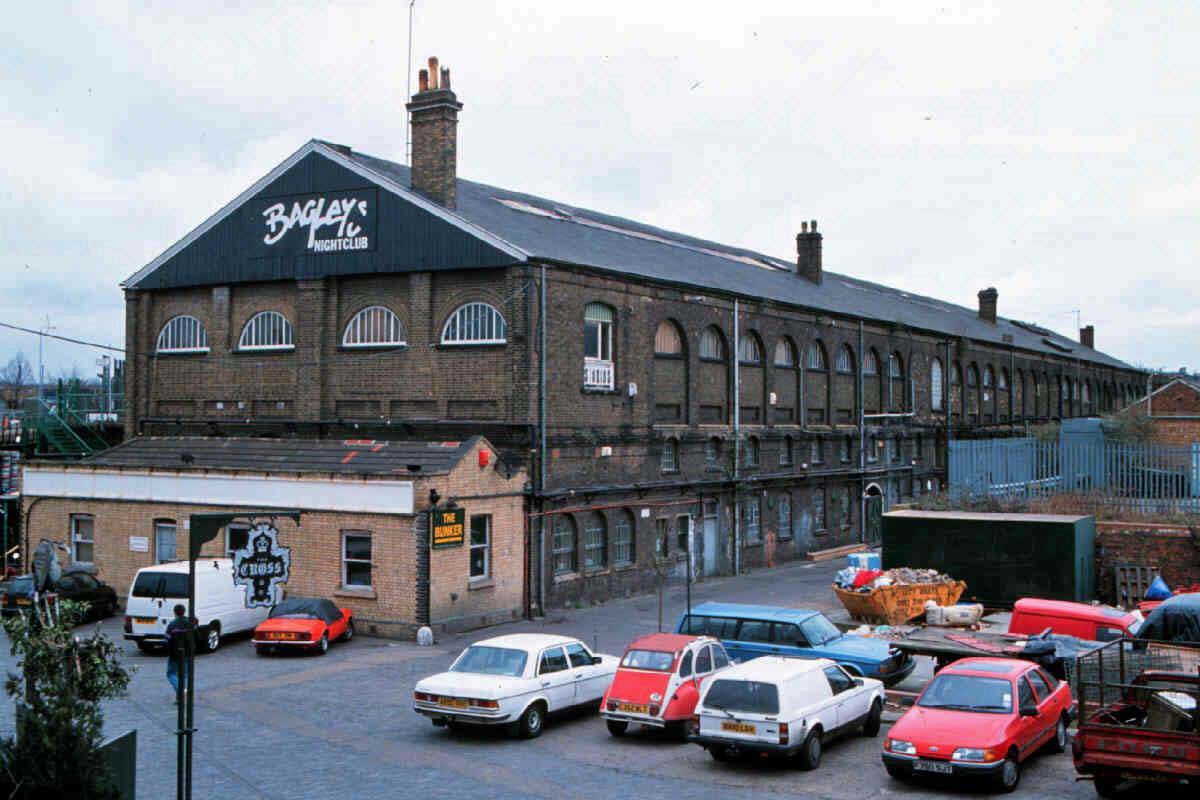

Bagley’s: The Warehouse That Defined A Rave Generation
There are clubs you remember fondly, and then there are clubs that feel like they rewired your nervous system. Bagley’s was the latter. For anyone who came up in London’s 90s rave ecosystem, Bagley’s wasn’t just a venue, it was a rite of passage. You didn’t “go out” to Bagley’s. You entered it, surrendered to it, lost entire nights inside it. Time behaved differently there and whatever music you thought you were into when you arrived was probably different by the time you left.
Bagley’s was messy, massive and slightly unhinged. Like so many of London’s most important cultural spaces, it now only exists in our collective memories.
Before the Bass: The History Of Bagley’s
Long before DJs hauled bags of vinyl through its doors, the building that would become Bagley’s had already lived several lives. Built in the 1850’s as part of the King’s Cross freight and coal network, the entire surrounding area was used to store coal for trains.
Two decades later, much of the area was being converted into buildings and by the 1880’s a section of the complex was converted into a warehouse for a Yorkshire based glass manufacturer called “Bagley’s of Knottingley”. They were riding a wave of expansion through their popular art deco pressed glass. Bagley’s was born!
But, by the late 20th century, the structure supporting the industrial age of coal and glass had collapsed. King’s Cross, once the engine room of London logistics, was a wasteland of boarded-up warehouses, dodgy pubs and railway sidings. It was unloved, unfashionable and abandoned, which, of course, made it perfect for a rave. In 1983 a huge fire destroyed much of what was left of the original warehouse buildings.
The Early 90s: When Warehouses Became Temples
Bagley’s was initially used for photo and video shoots, by Tony Askew, who leased the buildings, “We got a lease on Bagley’s for £3 a week”. In 89 his son asked “Can I put a party on?”. Two thousand acid house ravers turned up, all paying £20 and suddenly a new business opportunity arose.
Bagley’s opened as a licensed venue in the early 90s, at the exact moment when UK rave culture was being forced indoors. The heady days of the acid house movement colliding with new laws, police pressure and a government deeply suspicious of repetitive beats. What had once happened in fields, abandoned airfields and cracked warehouses, now needed a more official home.
What stood Bagley’s Film Studios apart as a London venue and cemented it as one of the UK’s primary rave locations was it’s size and it’s late license. This is long before the curated rave venues and purpose built super clubs, when promoters would often use Leisure Centres and other spaces to hold gigantic, licensed raves. But Bagley’s was ready to roll!
Early nights like Freedom, Mud Club, Pushca helped define the venue’s reputation for wild multi-genre parties. Slowly the harder end of the rave scene started to use the venue, with iconic 90’s promoters like Labrynth, Raindance, Slammin Vinyl and World Dance slowly turning the space into the stuff of rave legends.
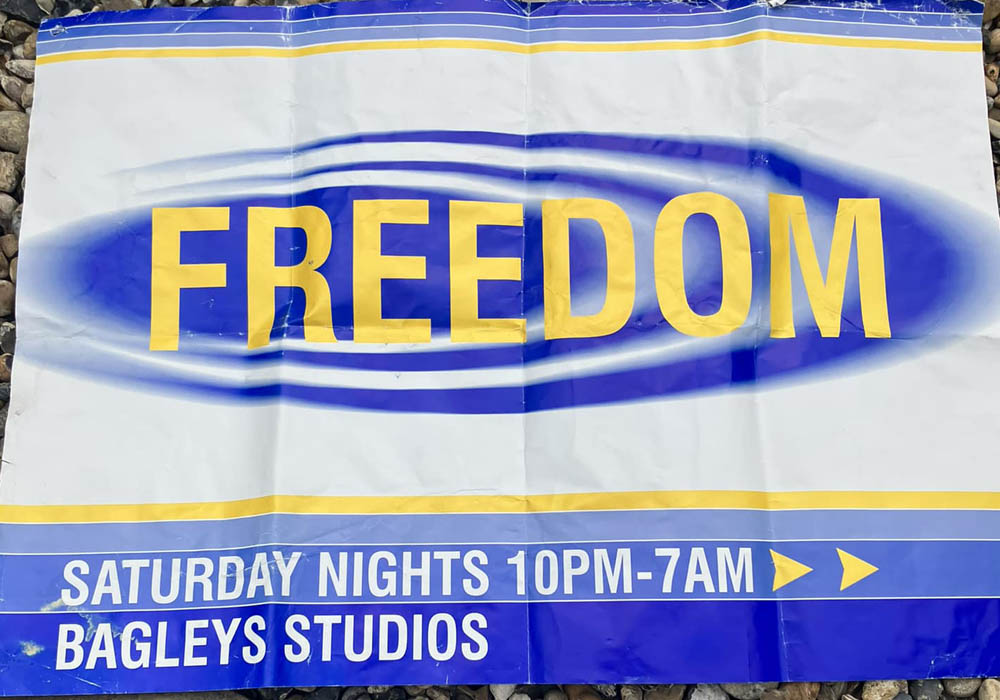 By the Mid nineties it had cemented itself as a part of the national rave scene. As the rave scene fractured into different genres, with bigger distinctions between them than ever. Saturday nights were regular house events and Fridays became the nights for underground raves.
Inside Bagley’s: A Controlled Free-For-All
Trying to describe Bagley’s to someone who never went is almost pointless. It was too big, too chaotic, too physical to reduce to words. But here goes.
You entered through the freight yard, already half convinced you’d taken a wrong turn. Inside, the building unfolded like a maze: Once you made it through the often slightly over zealous security, you walked into a room M.C Escher would have been proud off. Staircases, darkness and confusion. There was a small room with a Soundsystem to one side of this and it became a waiting area for people wondered if there friends would ever come out of the loos.
The moment you entered, the sweat and music hit you like a truck. The darkness of the venue, dirt covered, dripping walls, loud clashing sound systems and rave lighting and décor overwhelmed you. By the time you made it upstairs into the main club you had abandoned all hope of knowing what was going on.
Upstairs there was perhaps Bagley’s saving grace, the enormous outdoors “chill out area”. A huge space running parallel to the three main “arenas”. Music and steaming ravers washed out of each rooms entrance into the massive fenced area. Even in the depths of winter, topless ravers gurned about trying to cool of from the never ending heat inside.
Inside the main room was chaos. A huge room with a brutal Soundsystem and a massive stage at one end. Sweat condensed on the walls. The air was thick with smoke machines, body heat and the kind of chemical optimism that defined the era. Lazers, lights, lighters and fog horns all going off at once. Mc’s booming out to you and tunes that defined an era smashing their way through your cerebral.
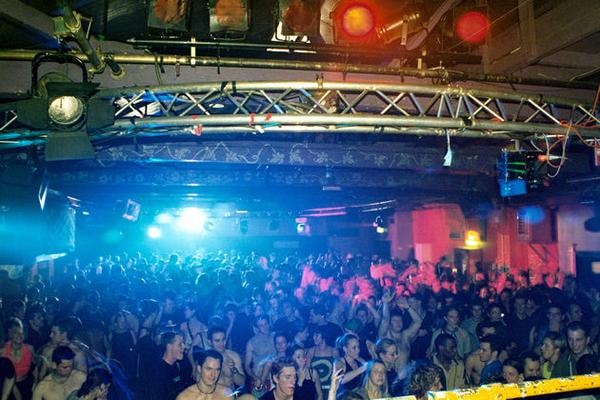 The other two rooms upstairs were slightly smaller but usually no less bonkers. The venues 4 or was 5 or 6 rooms allowing sub genres and smaller DJ’s to create a true rave mashup. You could dance to jungle in one room, house in another, techno somewhere else entirely. If you got bored, you just moved. If you got overwhelmed, you disappeared into the crowd until you re-emerged reborn.
King’s Cross: The Last Wild Zone
Bagley’s thrived because of where it was. In the 90s, King’s Cross was still rough around the edges and that roughness bought freedom. There weren’t luxury flats complaining about noise. There weren’t brand partnerships or curated “experiences.” There was just space, sound and a shared understanding that weird things happened here after dark.
Bagley’s sat alongside other legendary venues like The Cross, forming a short-lived but unforgettable clubland zone. You could hop between parties, follow sounds across railway arches, end up somewhere you hadn’t planned to be.
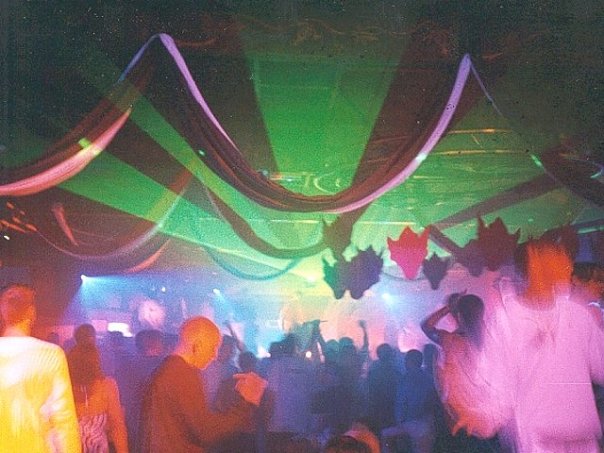 From United Dance to Best of British, Slammin Vinyl, Double Dipped and Raindance, there were so many nights and so many iconic sets from so many different genres of dance music.
For a few years, King’s Cross was one of the most important dance music hubs in the UK. And Bagley’s was its beating heart.
The Slow Shift: Rebrands and Reality Checks
By the early 2000s, the landscape was changing. Dance music had gone mainstream. Festivals were booming. London property values were accelerating at a terrifying pace. The idea that a gigantic warehouse rave could exist indefinitely in central London was becoming fantasy.
Bagley’s attempted to evolve. Under new management it rebranded as Canvas, aiming for a sleeker, more contemporary identity. Some nights still delivered. The building still had magic. But something had shifted.
It wasn’t just Bagley’s, it was the city. The margins were shrinking. Licenses got tighter. Costs went up. The wildness that defined 90s rave culture was becoming harder to sustain in a city that increasingly saw nightlife as a problem to be managed rather than a culture to be nurtured.
The Last Dance
When Bagley’s finally closed, it didn’t feel shocking , but it did feel devastating. Another space lost. Another chapter closed. The final nights were heavy with nostalgia and defiance: people dancing like they were trying to imprint the building into their bones.
And then it was over. The lights came on. The doors shut. The silence set in.
Afterlife: From Rave Ruins to Retail Reality
For years after its closure, Bagley’s existed as a ghost. Empty rooms. Dusty floors. The echo of bass that wasn’t there anymore. Urban explorers snuck in. Photographers documented the decay. It became a symbol of what London had lost.
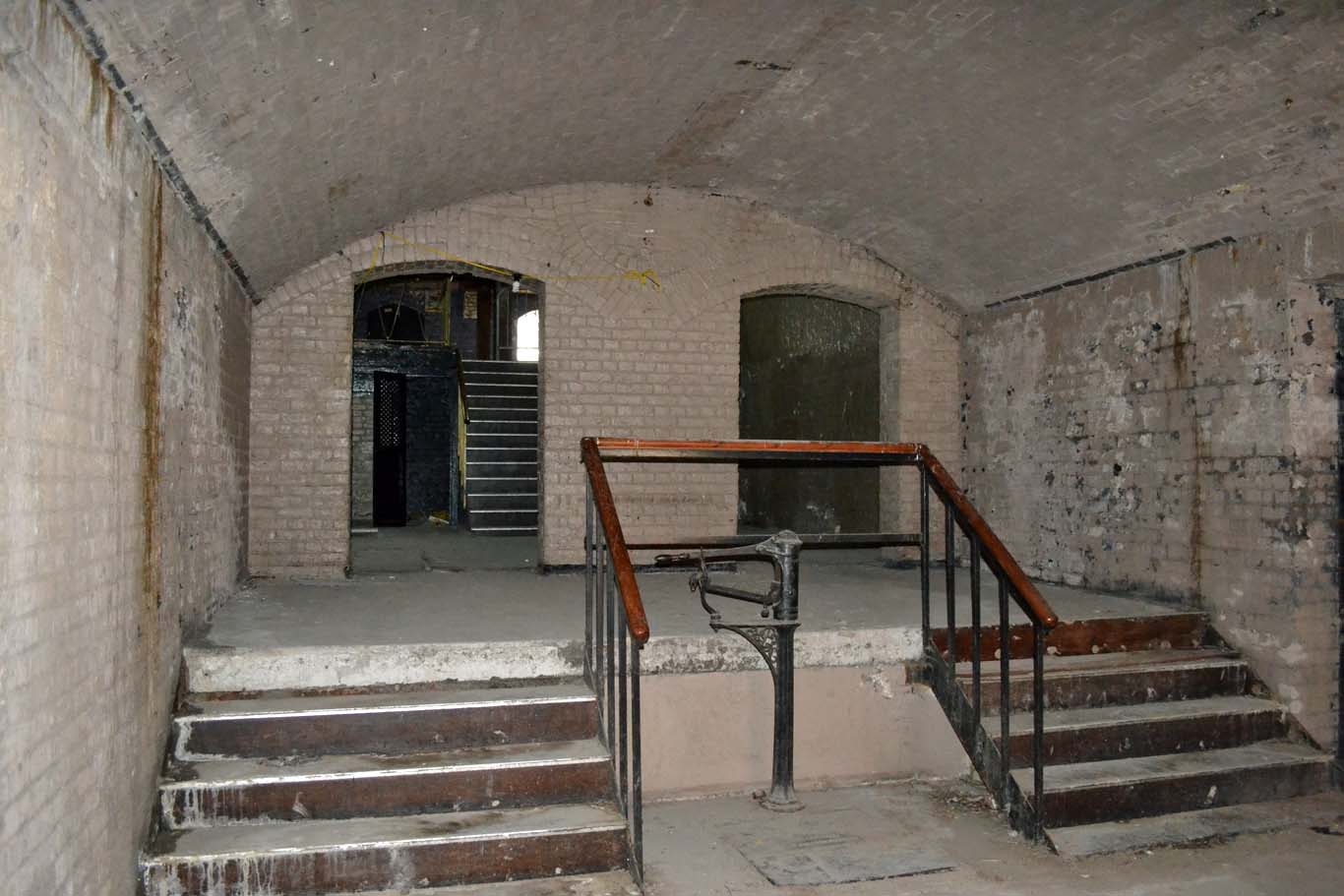
Eventually, regeneration arrived. The warehouses were restored, cleaned, softened. Today, the site forms part of Coal Drops Yard, a beautifully designed retail and leisure complex filled with boutiques and restaurants
It’s impressive. It’s successful. And it is completely incompatible with the idea of an all-night rave.
The most Bagley’s gets now is a street name, a plaque, a memory. The city moved on.
But we remember!
Somewhere under the polished stone of Coal Drops Yard, under the footsteps of shoppers and tourists, there’s still a warehouse that once shook with bass, sweat and possibility. And for those who were there, Bagley’s will always exist exactly as it was when the DJ dropped that tune and the whole room lifted up in unison one final time.