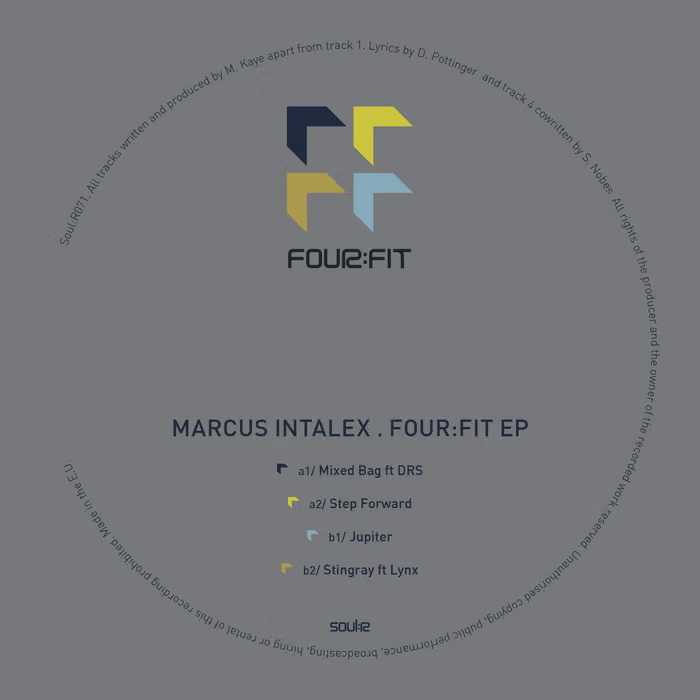

Review of Stingray by Marcus Intalex and Lynx
Review of Stingray by Marcus Intalex and Lynx
written by Ethan Pullan
Stingray by Marcus Intalex and Lynx is one of those tracks that shows exactly how far you can push drum and bass without ever going loud or messy. It is a tune built on control, tight production, and a very clear idea of what it wants to do. From the first few seconds, you can tell it is not trying to be a big rave smasher. Everything is held in place, everything is clean, and the energy comes from how well the whole thing is put together.
The intro sets the tone straight away. It is spacious, but not empty. You can hear the attention to detail in the percussion and the little sounds that flicker around the edges. Nothing jumps out too aggressively, but everything has purpose. The atmosphere is cold and stripped back, and it gives you that feeling that the tune is gearing up for something without rushing to get there. It is the kind of intro that DJs love because it gives you room to blend, tease, and build tension in a set.
The drums are one of the first things that really stand out. They are crisp, tight, and very direct. There is no fluff around them. Every hit lands exactly where it should. Even before the drop, the rhythm is already pushing the tune forward. It has that rolling energy that keeps your head nodding without needing to go full throttle. This is something both Intalex and Lynx were known for: drums that feel simple on the surface but are actually incredibly well‑designed.
As the tune builds, the bass starts to creep in. It does not come in with a big sweep or a dramatic rise. It just slowly grows underneath everything, adding weight bit by bit. The build up is subtle, but it works because the tune is so focused. You can feel the tension rising even though nothing huge is happening. That is the kind of confidence you get from producers who know exactly what they are doing.
When the drop hits, it is not a big explosion. It is more like the tune finally locking into gear. The bassline slides in with this smooth but slightly dangerous movement, and the drums settle into a groove that feels effortless. The energy comes from how tight everything is. The bass does not roar. It glides. The drums do not smash. They punch. The whole track moves forward with a steady, controlled force that keeps you locked in.
This is where the tune really shines. It is not trying to be flashy. It is not trying to overwhelm you. It is all about the groove. The bassline has this slippery, rolling feel that keeps the tune constantly shifting. The mid‑range stabs cut through the mix with just enough bite to keep things interesting. The little FX and background details give the track movement without cluttering it. Everything is balanced.
As the tune progresses, it keeps that same energy going. It does not rely on big switches or sudden changes. Instead, it evolves slowly. The bass changes shape slightly, the drums shift their pattern, and new textures appear in the background. These small changes keep the tune fresh while still holding the same vibe. It is the kind of track that works perfectly in a long mix because it gives you room to play while still carrying its own weight.
One of the most impressive things about Stingray is how much space it uses. A lot of drum and bass producers try to fill every gap in the mix, but this track shows how powerful it can be when you leave room for the tune to breathe. The space is not empty. It is intentional. It gives the bass room to move. It gives the drums room to hit. It gives the details room to shine. This approach creates a kind of pressure that builds naturally as the tune rolls on.
This style of production has had a massive influence on the modern scene. You can hear the impact of Stingray in the deep and minimal side of drum and bass today. Producers are still chasing that clean, underwater‑style bass movement. They are still using tight, crisp drums that leave space instead of filling every corner of the mix. The idea that a track can be heavy without being loud, or energetic without being busy, is something that Stingray helped push forward.
You can also hear its influence in sound design. The strange, alien textures that appear throughout the track opened the door for more experimental sound choices in drum and bass. Metallic hits, glitchy percussion, unusual FX, and other left‑field elements are now completely normal in the genre. Back when Stingray dropped, that sound was fresh. It pushed boundaries without breaking the vibe, and it showed producers that you could be weird and still make something that works on the dancefloor.
Another big influence is the structure. The slow build, the controlled drop, the steady progression, and the lack of unnecessary switches have become a blueprint for a lot of deeper drum and bass. Instead of relying on big moments, the focus is on maintaining a strong, consistent energy. This approach has shaped entire labels, entire sub‑scenes, and entire generations of producers.