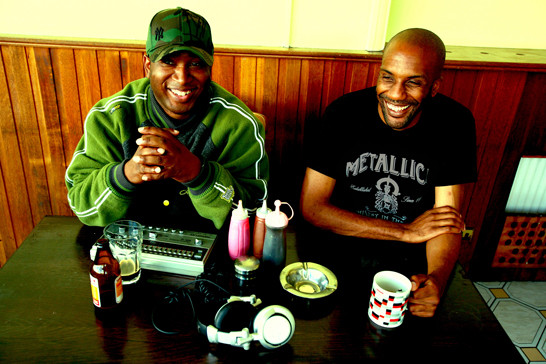

4 Hero
4hero: The Pioneers Who Helped Shape Jungle and Drum & Bass
Few acts have pushed the boundaries of UK jungle and drum and bass quite like 4hero. From the dark, sample-heavy energy of early rave to sophisticated jazz-influenced albums, the London production duo helped shape the sound of British electronic music while refusing to stay in one lane. Their influence stretches beyond their own records, through their pioneering label Reinforced Records and their role in nurturing the wider junglist movement.
From London’s Underground to Reinforced Records
The story began in North London during the 1980s, when Marc Mac (Mark Clair) and Dego (Dennis McFarlane) connected through the capital’s hip-hop and pirate radio scenes. The original 4hero line-up also included Gus Lawrence and Ian Bardouille, with the group’s roots firmly planted in the underground music culture that was developing around London.
As house, techno and breakbeat hardcore began transforming British dancefloors, 4hero were experimenting with ways to combine these emerging sounds. Hip-hop rhythms, heavy bass, chopped samples and futuristic electronic textures became central to their approach.
In 1989, members of the group established Reinforced Records, creating an independent platform for their productions and a label that would become one of the most important outlets in the development of jungle and drum and bass. Reinforced was more than a home for 4hero’s music: it became a meeting point for producers exploring the possibilities of breakbeats, bass and increasingly adventurous studio techniques.
The label’s early releases helped establish a sound that was distinctly British, drawing on American hip-hop and techno while reflecting the energy of the UK rave scene.
‘Mr Kirk’s Nightmare’ and the Dark Side of Rave
One of 4hero’s defining early tracks was ‘Mr Kirk’s Nightmare’, released in 1990. Built around a stark spoken sample, powerful breakbeats and unsettling electronic sounds, the track stood apart from the more euphoric side of rave music.
Its dark atmosphere captured a growing interest in harder, more experimental sounds, helping point the way towards the darker strain of breakbeat hardcore that would become known as darkcore. Rather than relying on straightforward dancefloor melodies, 4hero used samples and sound design to create tension and a sense of narrative.
This willingness to experiment became a defining feature of their work. As breakbeats accelerated and rave music splintered into new styles, the group continued exploring the possibilities of rhythm, atmosphere and unconventional sampling.
Their early album, In Rough Territory, released in 1991, documented this formative period. It reflected a scene still evolving rapidly, with producers pushing affordable studio technology into unfamiliar territory and developing sounds that had not yet settled into clearly defined genres.
From Hardcore to Jungle
By the early 1990s, 4hero were among the producers helping drive the evolution from breakbeat hardcore towards jungle and drum and bass. Their ‘Journey from the Light’ EP, released in 1993, demonstrated their ability to combine intricate breakbeats with darker, more atmospheric production.
At the same time, Reinforced was building a reputation for forward-thinking releases from a growing network of artists. The label became an important platform for producers who would go on to shape the scene, including Goldie, Doc Scott, Nookie and Peshay, alongside projects connected to 4hero themselves.
The relationship between 4hero and Goldie was particularly significant. Their studio work and shared musical environment helped contribute to the development of the production techniques and ideas that would become central to jungle and drum and bass.
Reinforced’s importance lay not just in the records it released, but in the creative community it supported. Producers could exchange ideas, develop their skills and push each other towards new approaches. That independent spirit became part of the foundations on which the wider scene grew.
‘Parallel Universe’ and the Bigger Picture
Rather than following a single formula, 4hero continued expanding their musical vocabulary. Their 1994 album Parallel Universe moved beyond the intensity of early rave, exploring jazz, soul, funk and more spacious electronic arrangements while retaining a strong rhythmic identity.
The record revealed a different side of the group: one interested not only in making club tracks, but also in building detailed musical worlds. Its blend of electronic production and jazz-influenced ideas foreshadowed the direction they would pursue more fully later in the decade.
In 1996, Marc Mac and Dego released music as Jacob’s Optical Stairway, further exploring the meeting point between Detroit techno, futuristic electronics and breakbeat-driven rhythms. The project demonstrated how comfortably they could move between musical styles without losing their distinctive approach to production.
‘Two Pages’: A Landmark Album
The next major chapter arrived in 1998 with Two Pages, released on Gilles Peterson’s Talkin’ Loud label. The album brought together drum and bass precision, live instrumentation, jazz, soul and intricate percussion, creating a work that reached well beyond the boundaries of the club.
Tracks such as ‘Universal Love’, revisited from Parallel Universe, showcased the warmth and musical depth behind their productions. Across the album, organic instruments and carefully constructed electronic rhythms sat alongside each other, giving the music a richness that distinguished it from more conventional dance releases.
Two Pages earned 4hero a Mercury Prize nomination and became a landmark in the group’s career. It demonstrated that music rooted in jungle and drum and bass could be ambitious, exploratory and album-focused without abandoning its rhythmic foundations.
The album also helped establish a wider conversation about the relationship between electronic music and live musicianship, anticipating the growing interest in broken beat, nu-jazz and more experimental forms of UK dance music.
A Lasting Influence
4hero’s later albums, including Creating Patterns (2001) and Play with the Changes (2007), continued their exploration of soul, jazz, broken beat and electronic production. Their wider work under different aliases also reflects a consistent interest in discovering new directions rather than repeating past successes.
Their legacy rests on two connected achievements: the music they made and the culture they helped build. Through Reinforced Records, they supported a generation of producers and contributed to the development of a scene that would become internationally recognised. Through their own records, they showed how breakbeat music could evolve from raw rave energy into something darker, more intricate and musically expansive.
4hero were never simply following the development of jungle and drum and bass. They were helping shape it, constantly testing the limits of the sound and moving on whenever a new possibility appeared.
Essential 4hero Tracks & Releases
- ‘Mr Kirk’s Nightmare’ (1990)
- In Rough Territory (1991)
- ‘Journey from the Light’ (1993)
- Parallel Universe (1994)
- Jacob’s Optical Stairway (1996)
- Two Pages (1998)
- Creating Patterns (2001)
- Play with the Changes (2007)
From the early days of Reinforced to the expansive sound of Two Pages, 4hero helped establish the creative foundations of jungle and drum and bass. Their music remains a reminder that the genre’s history is not just about fast breaks and heavy bass, but also about experimentation, independence and the constant drive to take the sound somewhere new.