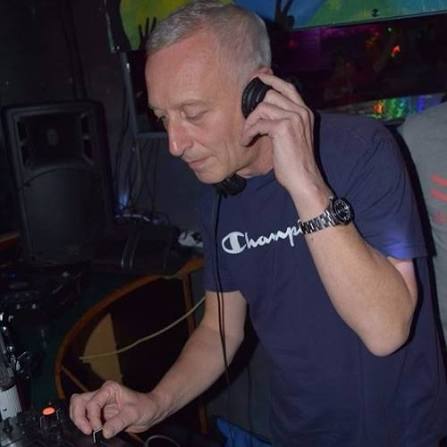

Ellis Dee
Ellis Dee: The Captain of the UK Old Skool Rave Scene
Ellis Dee is one of the DJs whose career runs through the major chapters of British rave culture, from the arrival of acid house in the late 1980s to breakbeat, jungle and drum & bass. Known to generations of ravers as The Captain, he made his name behind the decks at some of the UK’s biggest early-1990s events, while also producing records that captured the energy of the hardcore era.
Unlike DJs who arrived on the scene after rave had become an established commercial movement, Ellis Dee was involved from the beginning. He organised parties, played pirate radio, worked in the studio and helped develop the music that soundtracked the transition from acid house into breakbeat hardcore.
From South London Parties to Acid House
Ellis Dee began DJing at around 15, playing parties and small venues before the acid house explosion transformed British nightlife in 1987–88.
Based in South London, he became involved in organising underground parties, including an event known as Rave in the Cave, held in a garage around Elephant and Castle. The party ran for approximately six months before being shut down by police.
The experience reflected the DIY spirit of the early rave movement. Small groups of promoters and DJs were creating their own events, bringing together imported house records, emerging British dance music and crowds looking for something different from conventional club nights.
Ellis Dee adopted his DJ name around this period and began building a reputation for his mixing. He also spent approximately two years broadcasting on Sunrise Radio, a pirate station that gave DJs an important platform before dance music broadcasting became more established.
In 1989, he moved into music production, working with Rennie Pilgrem and Nick Newton as part of Rhythm Section. The project gave him an opportunity to explore the studio side of dance music at a time when DJs were increasingly becoming producers in their own right.
Rhythm Section and the Rise of Hardcore
As the UK rave scene expanded between 1990 and 1992, Ellis Dee became a familiar name on event line-ups. He was associated with the World Dance Organisation, where he was one of two resident DJs alongside DJ Hype, and appeared at major events including Telepathy, Raindance and Fantazia.
Fantazia, founded in 1991, became particularly important during the early-1990s rave boom. Its large-scale events brought together thousands of people, with line-ups featuring DJs from across the emerging hardcore scene.
Ellis Dee headlined Fantazia events during 1992 and beyond, sharing bills with artists including Carl Cox, Grooverider, Slipmatt and Ratpack. His sets from this period became widely circulated on cassette, an important part of rave culture before digital downloads and streaming.
For many ravers, recorded DJ sets were souvenirs of nights out and a way to hear performances they had missed. Ellis Dee’s tapes from the era remain associated with the fast, energetic mixing style of early UK hardcore.
Rhythm Section continued alongside his DJ career. Working with Rennie Pilgrem and other collaborators, the project explored the breakbeat-led direction that was emerging from British rave music. It connected Ellis Dee to a wider network of producers who would go on to influence the development of breakbeat and electronic dance music.
Ellis Dee Project: Rave Anthems
Alongside his work with Rhythm Section, Ellis Dee released music under the name Ellis Dee Project.
Two notable titles were Rock to the Max and Desire, which appeared in connection with the Fantazia compilation releases The First Taste and Twice as Nice. These records captured the direct, high-energy approach of the hardcore period, when DJs and producers were turning the sounds heard in clubs and warehouses into records for a rapidly growing audience.
The early 1990s were a period of constant change. Breakbeat hardcore was developing through faster tempos, chopped-up funk samples and increasingly prominent basslines. As the sound diversified, jungle began to emerge as a distinct style, while other producers moved towards happy hardcore and different forms of rave music.
Ellis Dee continued to work across these changing styles rather than tying himself to a single genre.
After the Criminal Justice Act
The Criminal Justice and Public Order Act 1994 became a defining moment in the history of UK rave. Its provisions targeting gatherings featuring repetitive beats, alongside wider policing and licensing pressures, contributed to the decline of the large unlicensed rave scene.
For DJs and promoters who had built their careers around the early rave circuit, the mid-1990s brought a changing landscape. Club nights, licensed events and new musical styles increasingly took the place of some of the huge gatherings that had defined the previous years.
Ellis Dee continued performing and working in music. During this period, he toured Florida with Rennie Pilgrem, maintaining their creative partnership as breakbeat developed on both sides of the Atlantic.
As jungle and drum & bass gained momentum, Ellis Dee adapted to the changing sound. He became established on the drum & bass circuit and co-founded Collusion Records with DJ Swan-E. His work also extended beyond underground dance music: he produced and remixed Where Did I Go Wrong for UB40, demonstrating the range of his studio work.
Breakbeat, Point Breaks and Beyond
By the late 1990s, Ellis Dee was increasingly involved in breakbeat. Alongside his partner Syrus, he launched Point Breaks, while continuing to run Collusion Records.
He also renewed his working relationship with Rennie Pilgrem, releasing music through Pilgrem’s TCR label, short for Thursday Club Recordings. Their association continued into the 2000s, including a 2003 remix connected with Pilgrem’s Hedonizm album.
These projects reflected the continuing evolution of breakbeat as a club genre, drawing on the rhythmic foundations of rave while developing its own production techniques and dancefloor identity.
Ellis Dee’s career has therefore covered several distinct periods of British dance music: acid house, breakbeat hardcore, jungle, drum & bass and breakbeat. Few DJs from the original rave era have maintained such a direct connection with so many different stages of that history.
The Captain Still at the Controls
Ellis Dee continues to DJ and produce music, performing at old skool events and appearing on line-ups celebrating the rave era. His work has taken him internationally, with appearances across Europe, North America, Australia and Japan.
His place in rave history rests on more than nostalgia. He was active during the years when the scene was being built, from organising early parties and broadcasting on pirate radio to headlining Fantazia and developing music in the studio.
For Junglists and old skool ravers, Ellis Dee represents a link between the original acid house generation and the hardcore and jungle sounds that followed. His career documents a period when DJs were not simply playing records; they were helping create an entirely new culture.
Essential Ellis Dee Tracks and Projects
- Rock to the Max – Released under Ellis Dee Project and associated with the Fantazia rave era.
- Desire – Another Ellis Dee Project release from the early hardcore period.
- Rhythm Section – His production project with Rennie Pilgrem and collaborators.
- Where Did I Go Wrong – His production and remix work for UB40.
- Hedonizm remix work – His later collaboration with Rennie Pilgrem through TCR.
For a fuller picture of Ellis Dee’s career, his early-1990s Fantazia and hardcore mixtapes are also worth exploring: they capture the sound, pace and mixing style.