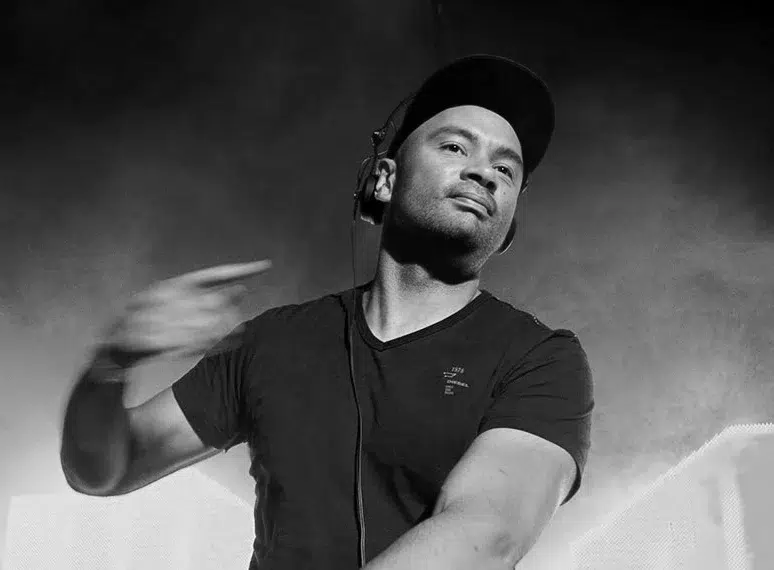

Dillinja
DJ Dillinja is one of the defining architects of drum & bass, a producer whose approach to bass, drums and sound design helped establish the darker, heavier side of the genre. Born Karl Francis and raised in South London, Dillinja emerged in the early 1990s and went on to become one of the most prolific and influential producers in drum & bass, releasing music through V Recordings, Metalheadz, Prototype, his own Valve and Test labels, and a long list of other respected imprints.
His musical foundations were laid long before jungle. Growing up in South London, Francis absorbed funk, jazz, reggae and rare groove, but it was the explosion of hip hop and electro during the 1980s that particularly grabbed his attention. Free events in local parks exposed him to soul, reggae and rare groove alongside the huge sound systems of artists such as Jah Shaka and King Tubby’s Hi-Fi. That combination of music and sound-system culture would eventually become fundamental to his approach to drum and bass.
When jungle began emerging from the hardcore rave scene, Dillinja was among the producers who immediately understood its possibilities. He began recording in 1991, initially releasing music under a number of aliases as he experimented with different styles and identities. Among the names associated with his catalogue are Capone, Trinity, Cybotron, D-Type, The Specialist and Suburban Knights.
His early releases quickly established a reputation for heavyweight production. Tracks including ‘Tear Off Your Chest’, ‘Deadly Deep Subs’ and ‘Sovereign Melody’ demonstrated an obsession with bass weight and detailed drum programming that would become the trademarks of the Dillinja sound. His early records appeared across labels including V Recordings, Metalheadz and Prototype, putting him at the centre of the rapidly developing jungle scene.
Dillinja’s connection with V Recordings was particularly important. Bryan Gee and the V team became early supporters of his work, helping provide a platform for his increasingly distinctive productions. His music stood apart through its physicality: basslines that seemed to dominate the entire frequency spectrum, tightly edited breaks and a rawness that retained the energy of early jungle while pushing production technology further.
By the middle of the decade, Dillinja had become one of the scene’s most in-demand producers. His 1994 Metalheadz release ‘The Angels Fell’ was an important moment, bringing his music to one of the most influential labels in the history of drum & bass. Around the same period he was releasing music through his own Deadly Vinyl imprint and developing an increasingly recognisable sound.
Another crucial relationship was with fellow South London producer Lemon D, real name Kevin King. The two met in the mid-1990s and quickly developed a creative partnership. Together they would build not only a label but an entire philosophy around how drum & bass should sound and feel.
That partnership produced Valve Recordings, launched in 1997. The name was inspired by the valve-based pre-amplifiers associated with reggae sound systems, reflecting the pair’s interest in combining the physical impact of Jamaican sound-system culture with the increasingly sophisticated technology of drum & bass production. The label’s first release was Dillinja’s ‘Violent Killa’, backed by Lemon D’s ‘12.01’.
Valve quickly developed an identity of its own. While many drum & bass labels were becoming associated with particular production styles, Valve was built around enormous bass, aggressive drums and uncompromising sound design. Test Recordings was established alongside it as a more anonymous, dancefloor-focused outlet, allowing the partnership to release music at a faster rate.
Dillinja’s obsession with sound did not stop at the studio. Frustrated by club systems that he felt failed to reproduce the extreme low frequencies of drum & bass properly, he and Lemon D began developing their own sound system.
The result was the Valve Sound System.
Rather than simply assembling a conventional collection of speakers, Dillinja and Lemon D wanted to create a system specifically designed around the frequencies and dynamics of drum & bass. They worked with speaker builders, component manufacturers and designers before eventually taking much of the construction into their own hands. The project became a huge financial and technical undertaking, reportedly costing well into six figures.
The finished system made its debut at Fabric in London in May 2001. The 96K Valve Sound System became legendary almost immediately, with its enormous low-end and physical impact turning the presentation of drum & bass into an experience in itself. It subsequently travelled extensively around the UK and internationally.
Its reputation was built on clarity, power and bass reproduction rather than simply volume.
The same period produced one of the biggest achievements of Dillinja’s recording career: Cybotron.
Released in 2001 following a deal involving London Records, Cybotron brought together Dillinja’s dark, futuristic production style across a full album. The project became closely associated with the Valve sound and demonstrated how far he had pushed drum & bass production.
The album helped cement Dillinja as one of the genre’s premier producers, with his technical approach attracting attention well beyond the underground. His reputation as a remixer also grew, leading to work for artists including David Bowie, Björk, Basement Jaxx, Faith No More, Soul II Soul, Amon Tobin, Artful Dodger and Jeru the Damaja.
His production philosophy was remarkably consistent: the drums had to hit hard, but the bass needed to have its own identity. Dillinja became known for making basslines that weren’t simply supporting elements underneath the breakbeats, they were often the central musical event.
That approach helped redefine expectations around drum & bass production. As UKF later noted, Dillinja established exceptionally high mixdown and sound-design standards early in the genre’s development, influencing generations of producers who followed. His fastidious drum edits, aggressive basslines and atmospheric textures became a template that could be heard across the scene for years afterwards.
The early 2000s also saw a run of major Valve releases, including ** Big Bad Bass ** and ** The Killa-Hertz **, both of which became important documents of the label’s sound. The catalogue demonstrated that Valve wasn’t simply a vehicle for Dillinja’s productions; it was becoming a complete musical world built around heavy bass and uncompromising dancefloor pressure.
Dillinja’s prolific output also meant that significant amounts of music remained unreleased. He became famous among DJs for producing huge numbers of tracks, often circulating them as dubplates rather than immediately committing them to vinyl. Some of this unreleased material would eventually resurface years later.
That became particularly important with the revival of Deep Jungle, which began releasing previously unheard Dillinja material. Tracks including ‘Deadly Deep Subs’ and ‘Sovereign Melody’ introduced another generation to music that Dillinja had produced years earlier. DJ Mag documented how the label eventually persuaded him to release some of this material after years of keeping it locked away.
Despite the enormous productivity of his early career, Dillinja eventually stepped back from production. By the late 2010s, he had spent years concentrating more heavily on DJing, but the urge to return to the studio eventually came back.
In a 2020 interview with UKF, Dillinja explained that he had rediscovered the excitement of creating music and was rebuilding his studio. He also spoke about bringing Valve back, including new remixes of classic material and plans for new productions.
That return has helped underline the longevity of his influence. Dillinja continues to appear on contemporary lineups alongside both the pioneers of drum & bass and younger generations of producers and DJs.
His continuing relevance comes down to something remarkably simple: sound.
Few producers have had such a clearly identifiable sonic fingerprint. A Dillinja track can often be recognised within seconds, the drums clipped and precisely engineered, the bass distorted and physical, the atmosphere dark and futuristic. Even when his productions are separated by decades, that DNA remains intact.
The Valve Sound System extended that philosophy into the physical world. Dillinja wasn’t satisfied with making records that sounded powerful in the studio; he wanted to build an environment where drum & bass could be experienced at its full potential. That connection between production and sound-system culture is one of the most important parts of his legacy.
More than three decades after his first releases, Dillinja remains one of the key figures in the history of drum & bass. His records helped push the genre towards darker, heavier and more technically ambitious territory, while Valve became one of the most recognisable institutions in British bass culture.
From the early days of V Recordings and Metalheadz to Valve, Cybotron, Big Bad Bass, The Killa-Hertz and the continuing resurrection of his unreleased catalogue, Dillinja’s career has been defined by one overriding obsession: making drum & bass hit harder.
Essential Tracks & Releases:
🎧 Dillinja – Tear Off Your Chest
🎧 Dillinja – Deadly Deep Subs
🎧 Dillinja – Sovereign Melody
🎧 Dillinja – The Angels Fell
🎧 Dillinja – Violent Killa
🎧 Dillinja – Hard Noize
🎧 Dillinja – Cybotron
🎧 Dillinja – Twist ‘Em Out
🎧 Dillinja – Grimey
🎧 Dillinja & Lemon D – Big Bad Bass
🎧 Dillinja & Lemon D – The Killa-Hertz
Bass pressure. Ruthless drums. Sound-system science. Dillinja is one of the great architects of modern drum & bass, a producer who didn’t just help define how the music sounded, but helped build the machinery capable of delivering it at full force.