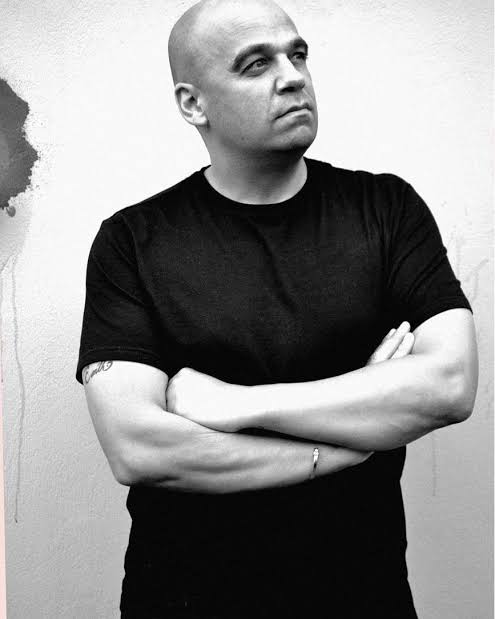

Doc Scott
Doc Scott is one of the foundational figures of British jungle and drum & bass, a DJ, producer, label owner and tastemaker whose influence stretches back to the earliest days of hardcore and the emergence of jungle. Born Scott McIlroy in Coventry in 1971, he has spent more than three decades at the cutting edge of underground dance music, developing a distinctive sound built around deep bass, stripped-back drums, atmosphere and relentless forward momentum. He is also widely known by his production alias Nasty Habits.
Scott’s musical education began well before jungle existed. Growing up in Coventry, he was exposed to a remarkably broad range of sounds through his father, including reggae, dub, rock, electronic music and experimental artists. He also became fascinated by hip hop, electro and techno, with Street Sounds Electro 2 among the records that made a particularly early impression. Hearing Grandmaster Flash demonstrating turntablism on television convinced him that DJing was what he wanted to pursue, and he received his first set of decks as a teenager.
By 1989 and 1990, Scott was playing at some of the UK’s early rave and hardcore events, including Amnesia House and The Eclipse. As the rave scene developed, he travelled extensively around the country, becoming part of the generation of DJs who were witnessing the transformation of rave and hardcore into the faster, darker and increasingly experimental sound that would become jungle.
Production initially came almost by accident. Scott bought an Akai S950 sampler and began experimenting with the equipment, eventually turning some of those early hardcore ideas into his first release, The N.H.S EP. Simon ‘Bassline’ Smith signed the record to Absolute 2, and it made an immediate impact, reaching number three in the UK Dance Chart. Scott had suddenly moved from being a DJ experimenting with production to becoming a significant new producer in his own right.
His next major step was becoming involved with Reinforced Records, the influential label founded by 4hero’s Dego and Mark Mac. Working alongside artists including 4hero and Goldie, Scott absorbed a huge amount of production knowledge during a period when the boundaries of jungle were still being established. Releases under his Nasty Habits alias, particularly As Nasty As I Wanna Be, helped pioneer the darker, more stripped-back sound that would become increasingly important to mid-’90s drum & bass.
The Nasty Habits name became particularly important to Scott’s early identity. Tracks such as ‘Here Come The Drumz’, originally released on Reinforced, demonstrated his ability to create enormous impact from relatively sparse ingredients — hard-edged breaks, heavyweight bass and carefully controlled atmosphere. The track would become one of the defining early examples of what was increasingly being referred to as the ‘darkside’ of jungle.
Scott was also central to the formation of the musical community around Metalheadz. Working alongside Goldie and the wider Metalheadz crew, he became a key figure in the label’s formative period, with his ‘VIP Drumz’ becoming the first Metalheadz release. The record established the label’s uncompromising aesthetic from the outset and helped set the tone for one of the most influential imprints in drum & bass history.
During the mid-’90s, Scott’s reputation as a DJ grew alongside his production work. His sets at the legendary Metalheadz Blue Note sessions and the seminal Speed nights became particularly respected. He was part of a generation of selectors — alongside figures such as Grooverider, Fabio, Randall and Bryan G — who were not simply playing drum & bass but actively working out what the new music could be.
His DJing philosophy was rooted in musical breadth. Rather than treating jungle as an isolated genre, Scott brought together influences from techno, electro, hip hop, house and experimental electronic music. That approach helped make his sets particularly distinctive during a period when DJs were still establishing the rules of the new sound. His ability to find connections between apparently unrelated records became one of his defining strengths.
Then came ‘Shadow Boxing’, released in 1996 under the Nasty Habits name. It remains one of the most celebrated productions of the era and arguably Scott’s signature record. Built around a hypnotic central loop, devastating bass weight and sparse but precisely placed percussion and effects, it sounded radically different from much of the jungle being released at the time. The track’s influence was enormous, and it would ultimately provide the foundation for Scott’s own label.
That label was 31 Records, launched in the mid-’90s and initially driven by the impact of Shadow Boxing. From the beginning, 31 reflected Scott’s broad musical taste rather than following a narrow formula. The catalogue crossed deep and dark drum & bass, techno-influenced rhythms, experimental production and atmospheric sounds, establishing a distinctive identity that became instantly recognisable to DJs and record collectors.
31 Records quickly became far more than a platform for Scott’s own music. He used the label to support producers who were pushing drum & bass in new directions, with early releases from artists including Digital, Marcus Intalex, Ed Rush & Optical, Calibre, Klute, Dom & Roland and Friction. Pendulum also released Vault through the label in 2003, giving one of the future giants of drum & bass an important early release.
The label’s influence is difficult to overstate. For a generation of producers, a 31 Records release became a mark of quality and originality. Amit, one of the many producers influenced by the label, has described studying its early catalogue while working in a record shop, identifying Scott, Digital and Marcus Intalex as artists who established a particularly individual approach to drum & bass.
Scott’s own productions continued to demonstrate his range. Alongside the dark, heavyweight material associated with Nasty Habits, he explored more atmospheric territory, including ‘Tokyo Dawn’, released through the Good Looking-associated ecosystem. This ability to move between darkness and melody reinforced his reputation as a producer who could operate across the full spectrum of drum & bass.
Tracks such as ‘Unofficial Ghost’, ‘Drumz 95’, ‘Far Away’ and ‘Tokyo Dawn’ helped build one of the most distinctive catalogues of the 1990s. While some producers became associated with a particular sound, Scott continually evolved, maintaining the rhythmic discipline of jungle while incorporating deeper, more spacious and technologically influenced production.
His international career developed rapidly alongside the rise of drum & bass. By the mid-’90s, Scott was among the early generation of British drum & bass DJs taking the music overseas, performing in countries including the United States, Brazil and Japan in 1996, followed by Australia and New Zealand in 1997. His willingness to travel to places where the music was still relatively new helped contribute to the growth of international drum & bass culture.
Scott’s influence has never been restricted to records. Through 31 Records he helped create an infrastructure for underground music, while his DJ sets and radio work have consistently championed music that sits outside the obvious or fashionable choices. From 2014 to 2018, he hosted the Future Beats show on Origin FM, using the programme to explore new music and provide another platform for emerging artists.
The label itself has continued to evolve. After a period of reduced activity, 31 Records was relaunched with new releases and a renewed focus on the kind of forward-thinking drum & bass that had defined its early years. One of the first releases of that new era was an Om Unit remix of Shadow Boxing, a fitting meeting between one of jungle’s defining early records and a producer associated with its modern experimental revival.
Scott’s approach to 31 remains deeply personal. In a 2025 DJ Mag feature on the label, he described 31 as essentially a reflection of himself and emphasised just how broad his musical taste remains. That eclecticism can be traced directly back to his childhood listening — reggae and dub alongside Pink Floyd, Tangerine Dream, Kraftwerk, film scores, electro and techno.
That breadth is perhaps the key to understanding Doc Scott’s longevity. He has never been interested in simply reproducing the sound that made him successful. Even during the golden era of jungle, when he could have comfortably remained within the darkside sound he helped establish, he continued searching for new textures, rhythms and ideas.
As a DJ, that attitude has made him a respected tastemaker across generations. His sets continue to draw on the deep history of jungle while connecting it with contemporary drum & bass and experimental bass music. His ongoing appearances at Metalheadz events and Blue Note sessions demonstrate the strength of that connection to the culture, while recent bookings alongside artists from newer generations show that his influence remains relevant rather than purely historical.
More than thirty years after his first records appeared, Doc Scott remains an important link between the formative rave years and the modern drum & bass landscape. His catalogue contains some of jungle’s most enduring productions, while 31 Records has provided a home for generations of producers who share his commitment to originality and quality.
His importance isn’t simply down to a handful of classic tunes. Scott helped establish a production aesthetic, a DJ philosophy and a label culture that have all endured. The weight of Shadow Boxing, the darkness of Here Come The Drumz, the atmosphere of Tokyo Dawn and the uncompromising catalogue of 31 Records all point back to the same principle: drum & bass should never stop evolving.
Essential Tracks & Releases:
🎧 Nasty Habits – Shadow Boxing
🎧 Nasty Habits – Here Come The Drumz
🎧 Doc Scott – VIP Drumz
🎧 Doc Scott – Unofficial Ghost
🎧 Doc Scott – Drumz 95
🎧 Doc Scott – Far Away
🎧 Doc Scott – Tokyo Dawn
🎧 Nasty Habits – Liquid Fingers
Darkside pressure. Precision breaks. Underground vision. Doc Scott remains one of the architects of jungle’s darker evolution — a pioneering DJ, producer and label boss whose influence can still be heard every time a heavyweight roller drops on a darkened dancefloor.