
When the Rave Hits the Big Screen: Iconic Club Scenes in Film
For a generation raised on Jungle, Drum and Bass, Rave, Techno, House, Hardcore and the culture that surrounded them, seeing a rave represented on the big screen could feel strangely powerful, or deeply disappointing, depending on if the filmmakers got it right. Sometimes, they missed the mark and got the culture, the feel, the vibe all wrong. But at their best, these films captured something that photographs and records alone couldn’t: the atmosphere, chaos and vibes of a real rave.
From sweaty warehouses and legendary clubs to sun-drenched festivals and after-hours madness, these are some of our favourite films that put rave culture centre stage.
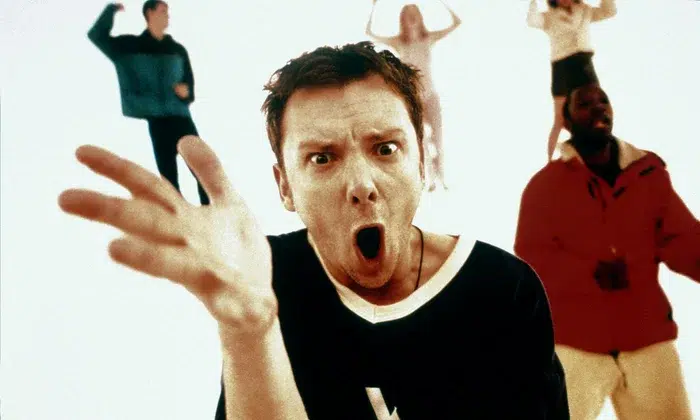
Human Traffic
Few films are as closely associated with UK club culture as Justin Kerrigan’s Human Traffic. Released in 1999, the film landed at exactly the right moment, capturing the spirit of an often misrepresented underground generation of ravers.
“Nice One Bruvvah”
The flashback to “Tom Tom’s Summer Of Love 91” is a classic look at (just) post acid house / early rave, all the way down to Vicks masks and endless whistles. It captures the spirit perfectly in a nostalgic, it was “better back in the day” kind of way.
The rave scenes in Human Traffic were filmed at The Emporium in Cardiff, renamed into the fictional Asylum for the film. The rave scenes might not be the most explosive, visually spot on gigantic warehouse raves that you could ever imagine. But like the whole film, it’s more about the spirit that they capture. True moments from everyone’s collective rave mind.
From chatting shit in a club, to coming up on pills, blagging, gurning, getting ready for the weekend, through to (of course) the legendary record shop scene that is imprinted on every Junglists memory. The film hits the refences and feeling so accurately nothing else really matters.
Blue Juice
Blue Juice isn’t really a rave film, it’s a surfer film. But it does feature one of the most visually accurate free party rave scenes ever created.
Set around a group of surfers in Cornwall and featuring the staggering cast of Catherine Zeta Jones, Sean Pertwee and Ewan McGregor, the 1995 film mixes surf culture, relationships and interweaves it with British drug culture, more than specifically rave culture.
The scene in question is the Beach Party scene, which the main characters come across from on top of a hill. The camera zooms down in a Lost Boys style shot, showing the lights, ravers and scale of a real free party. The atmosphere, the excitement of final reaching it.
“Excrement” as Ewan McGregor’s character says in excitement upon seeing it.
Beats
Beats takes us back to Scotland in the 1990s and into the world of illegal raving.
Set against the backdrop of the Criminal Justice and Public Order Act, the film follows two friends (Johnno and Spanner) who are determined to go to an illegal rave before their lives split into different directions.
Beats is filmed entirely in black and white and mirrors the political feelings of the mid nineties and the fears of the Criminal Justice Bill with the friendship of the two main characters.
The rave scene, captures some of the confusion, darkness and fear and then elation of arriving at a rave, taking drugs and coming up. The swirling crowds, characters coming out of the mist, happy people, big tunes and the atmosphere from the dance floor.
It’s a unique and very realistic perspective of early nineties raving. Slightly gritty, very sweaty and full of madness.
Shopping
Shopping is a darker vision of 1990s British youth culture, based around the explosion of joy riding and the sub cultures that fed of criminal underworld involved in it. It’s an often missed British classic that captures the rebellious spirit of rave effortlessly and shows us one of the most iconic party scenes ever captured (36 minutes in)
The film, starring Jude Law and Sadie Frost, moves through a world of crime, stolen cars and underground nightlife. Rather than presenting rave culture as pure escapism, Shopping places it within a rougher, more dangerous landscape.
The rave scene is in a tower block , accessed by a lift and when the lift doors open and you see through the bank of strobes, Tim from The Utah Saints, perched on top of the deck stand, mixing early Hip House tunes, captures the spirit of very early Warehouse rave culture and the mix of rave and Hip Hop culture perfectly. It could easily be in New York or the UK, it just captures a moment. It might not be the sweatbox of nutters that you want, but for a super cinematic, cool as you can get visual of how raving was for a moment, Shopping is the one!
Trainspotting
Trainspotting didn’t set out to be a rave movie, but dance music is woven deeply into its depiction of 1990s youth culture.
The film’s nightlife sequences capture a Scotland where clubs, drugs, music and youth identity are colliding. Its characters move through pubs, clubs and after-hours environments with the same restless energy that drives the rest of the film.
“Music is changing, Drugs are Changing” says Ewan McGregor while leaning against the wall of the club in a slightly weird tank top. It doesn’t really show an iconic rave, but the club scene captures how far dance music had inserted itself into mainstream “clubbing” culture at this point in the nineties and how much dance culture spread itself through all drug culture, from heroin too pills, the connections and links were everywhere and Trainspotting shows those blurred lines perfectly.
It’s All Gone Pete Tong
It’s All Gone Pete Tong takes the DJ movie and pushes it into surreal territory.
The story follows Frankie Wilde, a hugely successful Ibiza DJ whose hearing begins to deteriorate. The film’s club scenes initially present Ibiza as an exaggerated paradise of massive crowds, superstar DJs and hedonistic nightlife.
As Frankie’s hearing disappears, however, those scenes take on a different meaning.
The contrast between the huge club environments and Frankie’s increasingly isolated experience gives the film its emotional edge. His Cocaine problem spirals and he has a fight with a large imaginary Cocaine Badger (long before Cocaine bears became popular)
It’s a strange, funny and occasionally touching look at the mythology of the superstar DJ and the machine that surrounds them, full of comedic and tragic moments in equal parts.
The club scenes, capture a moment in Ibiza club culture perfectly where the DJ became a superstar and all that went with that.
Blade
Before vampires became a staple of blockbuster cinema, Blade delivered one of the most outrageous club openings of the 1990s.
Blade follows a crowd into what appears to be an enormous underground illegal rave in a meat packing warehouse. The atmosphere is dark, sweaty and heaving, with hundreds of people dancing beneath intense lighting, it gets the vibe and aesthetic spot on. As the door opens and Higher States of Consciousness kicks in, it gets the atmosphere surprisingly right.
Then the blood starts falling.
The famous blood-rave scene transforms the familiar imagery of a late-night club into something genuinely sinister. The crowd is unknowingly partying inside a vampire gathering, and the sudden revelation turns the dancefloor into a horror set-piece.
24 Hour Party People
Michael Winterbottom’s 24 Hour Party People is less about one particular rave than the entire evolution of Manchester’s underground music culture.
Moving through punk, post-punk, Factory Records, The Haçienda and the explosion of dance music, the film recreates a period when music could completely transform a city.
The Haçienda sequences are particularly important and as far as anyone who was really there can remember, get the whole thing as perfect as anyone has yet to recreate.
The film captures the wild west chaos of the early days at the Hacienda, The Happy Mondays, the Stone Roses, everything that made Manchester the iconic home of the Madchester movement, before it all went wrong. The parties are wild, the crowds are unpredictable and the culture is constantly mutating.
The Groove
In The Groove, the dancefloor becomes the centre of a coming-of-age story.
The film’s club scenes capture the anticipation and excitement of a night out, but the standout moment is the Heaven Sent sequence.
Set within the club environment, the scene captures that unmistakable feeling of being completely absorbed by the music and the people around you. It’s less about a conventional narrative and more about the sensation of nightlife itself.
South West 9
South West 9 heads into London’s underground for a much more intense portrait of nightlife.
Set around Brixton and the surrounding area, the film follows a group of characters whose lives collide over the course of a chaotic day and night.
Its rave and club sequences reflect the multicultural energy of London’s dance scene, while the film’s darker storyline gives the nightlife an edge.
The party isn’t presented as a sanitised version of club culture. It’s sweaty, unpredictable and occasionally dangerous, a place where different worlds can collide within the space of a single night.
When Cinema Meets the Dancefloor
What’s striking about these films is how differently they approach rave culture.
Human Traffic celebrates it. Beats turns it into rebellion. Blade turns it into horror. Trainspotting exposes both the highs and the lows. 24 Hour Party People places it inside a wider musical revolution, while It’s All Gone Pete Tong explores the mythology of the DJ.
Yet they all understand one fundamental thing: the rave is about more than music.
It’s the anticipation of the night. The journey there. The people you meet. The sound system. The lights. It’s hard to capture it all, it’s hard to recreate a memory on film, but these are some of the best attempts that have been made yet and we love them all.